
Conference Overview
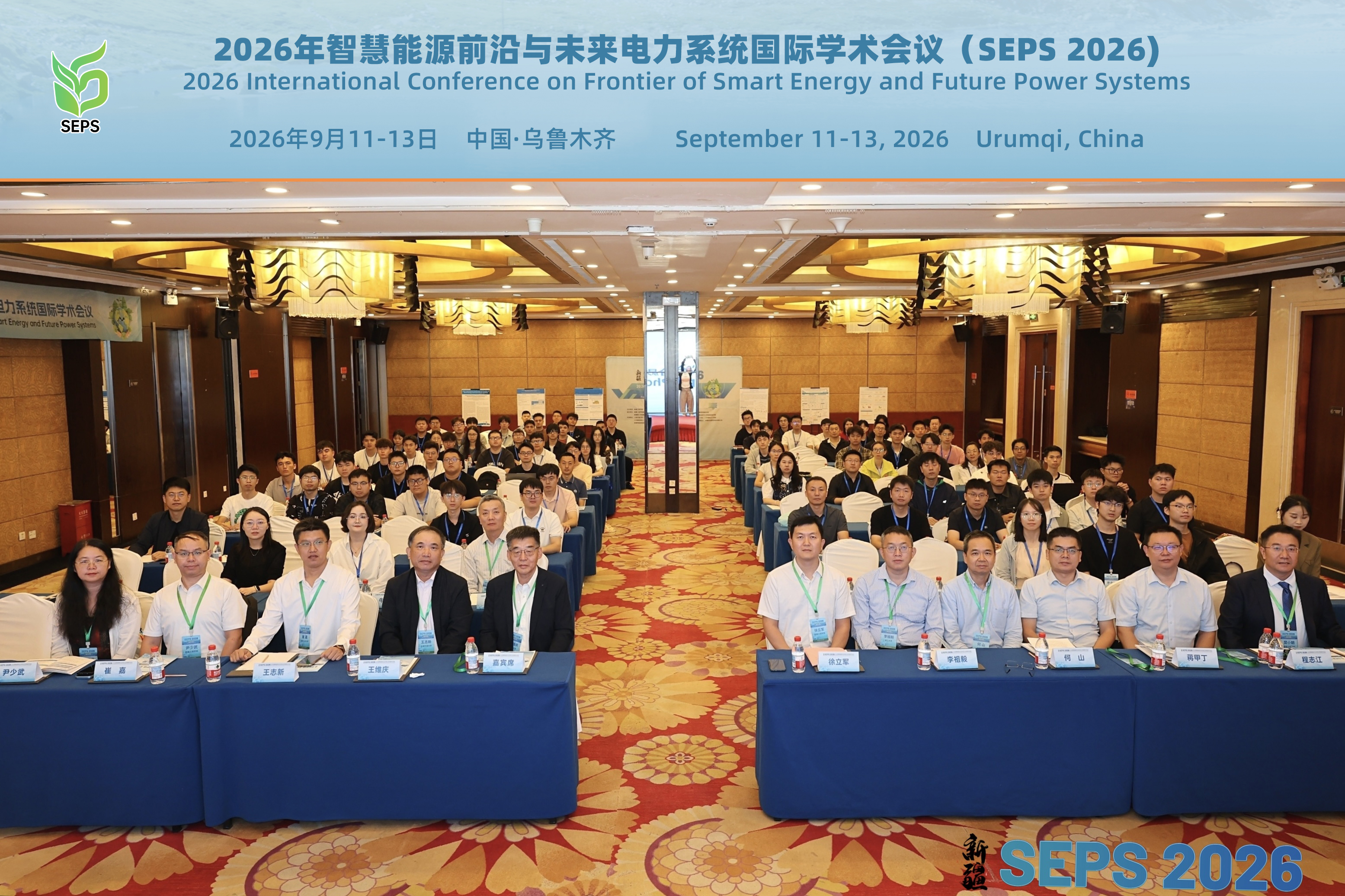
The 2026 International Conference on Frontier of Smart Energy and Future Power Systems (SEPS 2026) was successfully held on September 12, 2026, in Urumqi, Xinjiang. Hosted by Xinjiang Institute of Engineering and organized by the School of Energy Engineering at Xinjiang Institute of Engineering, School of Electrical Engineering at Xinjiang University, School of Energy and Materials at Shihezi University, Bingtuan Energy Development Research Institute at Shihezi University, School of Energy and Chemical Engineering at Xinjiang Institute of Technology, School of Energy and Control Engineering at Changji University, School of Electronic Engineering at Yili Normal University, and School of Intelligent Manufacturing at Xinjiang Industrial Vocational and Technical University.
The conference received support from Shanghai Jiao Tong University, Shenyang University of Technology, North China Electric Power University Xinjiang Alumni Association, Xinjiang Wind Power Guochuang Technology Co., Ltd., and academic journals includingElectric Power Construction,Integrated Intelligent Energy,Electric Power, andChina Energy News.
Focused on frontier issues and engineering practices in smart energy and future power systems, the conference centered on three major themes: "New-Type Power Systems and Renewable Energy Grid Integration Stability," "Smart Energy and AI-Driven Decision Making," and "New-Type Distribution System Planning, Operation, Dispatch, and Business Models." Nearly 100 experts, scholars, engineers, and young students from universities, research institutes, and enterprises across China attended the conference in person.
Opening Ceremony
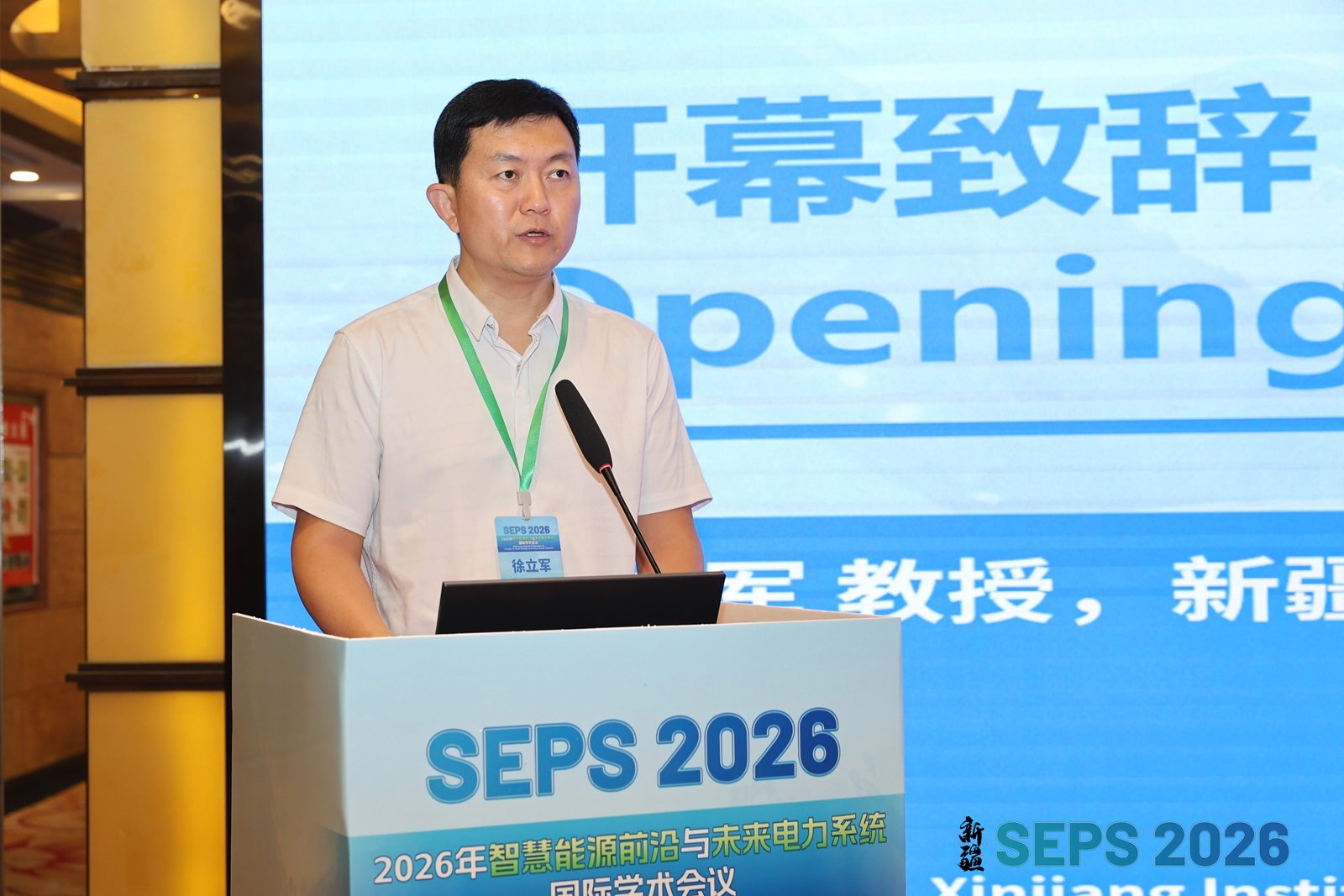
The opening ceremony was presided over by Professor Fan Xiaochao, Vice Dean of the School of Energy Engineering at Xinjiang Institute of Engineering. Professor Xu Lijun, Vice President of Xinjiang Institute of Engineering, delivered the opening remarks on behalf of the host institution. He extended a warm welcome to all experts, scholars, and industry colleagues present and introduced the university's educational journey of "built for coal, thriving through industry" along with its distinctive features in energy resources, safety and emergency management, and low-altitude economy.
Professor Xu noted that the energy and power industry is currently facing significant opportunities and challenges, including the construction of new-type power systems, high-penetration renewable energy grid integration and consumption, deep integration of artificial intelligence with energy, and the transformation and upgrading of distribution systems. As the inaugural conference, SEPS aims to gather wisdom from domestic and international experts in smart energy, creating an important platform for academic exchange, achievement sharing, and collaborative innovation.
Keynote Speeches
The conference featured five keynote speeches, moderated by Professor Fan Xiaochao. Distinguished experts presented cutting-edge research spanning new-type power systems, underground hydrogen storage, carbon emission situational awareness, the second electronics revolution, and computing-power coordination.
The five keynote speeches covered critical themes including renewable energy grid integration and consumption, large-scale energy storage, low-carbon operation, and computing-power coordination. The presentations addressed practical needs in high-penetration renewable energy power system construction while showcasing development trends in digitalization, intelligence, and low-carbonization in the smart energy field.
Parallel Technical Forums
On the afternoon of September 12, three parallel thematic forums were conducted simultaneously, facilitating in-depth exchanges around the conference's three major themes.
Conveners: Professor He Shan and Professor Wang Haiyun (Xinjiang University)
Invited Speeches:
Professor He Shan: "Control Strategy Research on Grid-Connected Photovoltaic-Storage Systems Based on Virtual Synchronous Generators"
Professor Song Dongran (Central South University): "Dual-Layer Model Predictive Control Method for Wind Farms Supporting Weak Grids"
Oral Presentations: Zhejiang University researchers presented series achievements on high-voltage stator design and rotor electromagnetic topology with multi-physics simulation of high-temperature superconducting synchronous condensers. Kong De'an from State Grid Xinjiang Electric Power Research Institute introduced peak-shaving and frequency regulation control optimization for thermal power units to suppress low-frequency oscillations. Su Wei from Northeast Electric Power University reported on dynamic performance analysis of transcritical CO2 compression energy storage systems.
Convener: Professor Cheng Zhijiang (Xinjiang University)
Invited Speeches:
Senior Engineer Yue Jingpeng (Guangdong Power Grid Electric Power Research Institute): "Key Technologies and Equipment for Wide-Band Oscillation Prevention and Control of New Energy and Energy Storage Grid-Connected Systems Near Load Centers"
Associate Professor Saniye Mahmut (Xinjiang Institute of Engineering): "Research on Security Region Observation and State Evaluation of Power Systems with Renewable Energy"
Oral Presentations: Zhao Pengbo from Zhejiang University introduced advances in model predictive control technology for power electronic converters from model-driven to data-driven approaches. Ge Jianing from Shihezi University reported on a dual-branch multi-scale Transformer photovoltaic power prediction method for green electricity consumption in electrolytic aluminum.
Conveners: Professor Yang Hejun (Hefei University of Technology), Associate Professor Li Quan (Xinjiang University), Lecturer Zhou Tianshuo (Shihezi University)
Invited Speeches:
Professor Cui Jia (Shenyang University of Technology): "Research on Deep Perception Methods for Power Big Data Oriented to Smart Energy"
Associate Professor Li Quan: "Research on Cooperative Operation and Black Start Technology of Park Microgrids Based on Electric Energy Routers"
Lecturer Zhou Tianshuo: "Work Domain and Work Capability of Integrated Energy Systems"
Oral Presentations: Guo Jianbo from Xinjiang University reported on performance evaluation of hybrid liquid carbon dioxide energy storage systems with hydrogen-doped gas turbines and organic Rankine cycles. Zhang Lingxi from Shihezi University introduced a two-stage low-carbon planning method for integrated energy systems in corn drying parks.
Submissions and Participation
Since the call for papers was issued, the conference received enthusiastic responses from domestic universities, research institutes, and energy enterprises, receiving over 70 submitted papers from more than 30 universities, research institutes, and enterprises. The submissions covered multiple disciplinary directions including power and electrical engineering, energy science, artificial intelligence, and electronics and communication technology.
Contributing authors included university professors, young scholars, graduate students, as well as engineering technicians from power grid enterprises, electric power design institutes, and new energy equipment enterprises, reflecting the close integration of theoretical research, engineering applications, and industrial needs.
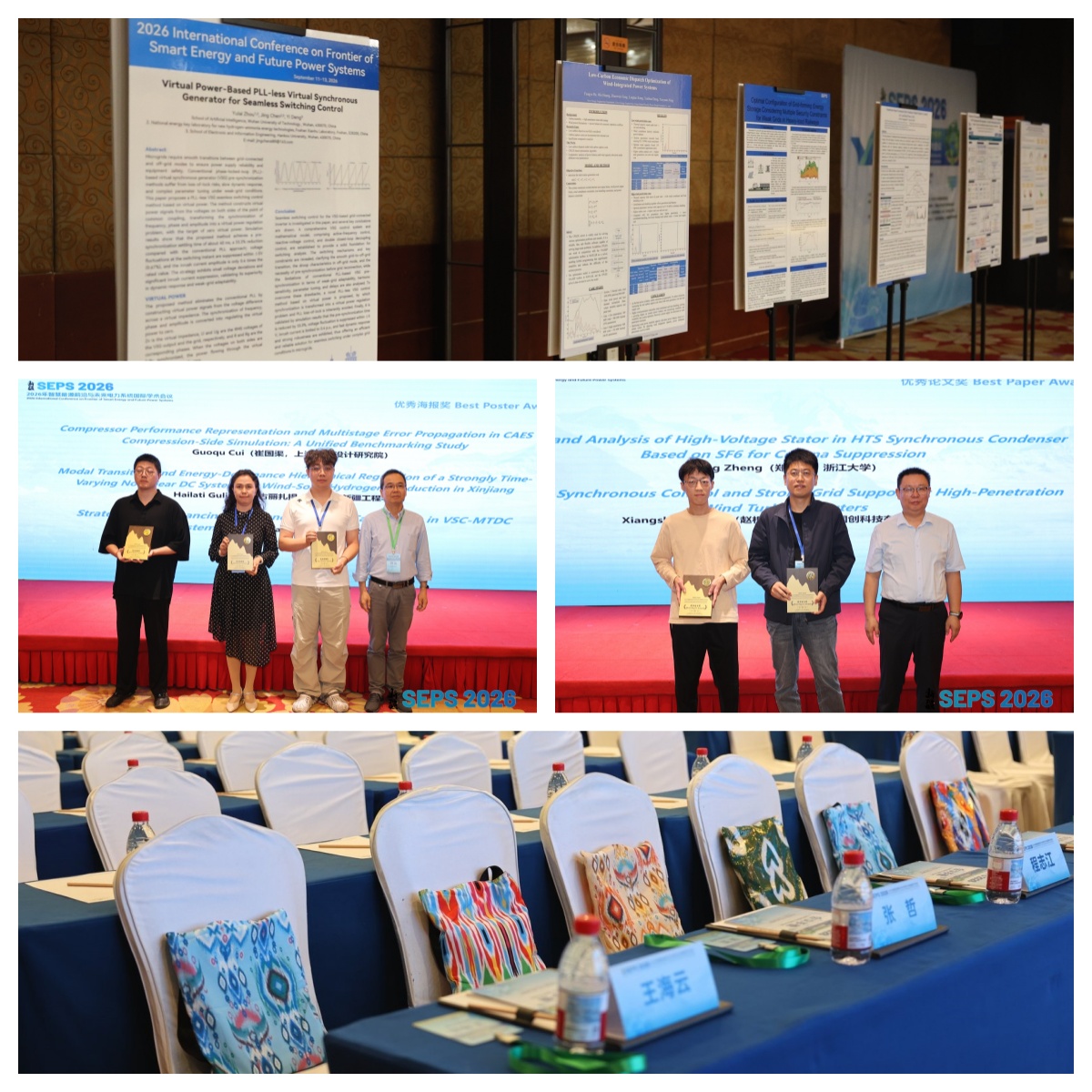
On the conference day, nearly 100 representatives from over 30 units across the country attended in person. In addition to contributing authors presenting oral reports and poster displays, invited committee experts, faculty and students from organizing institutions, and representatives from local energy enterprises also attended. Participants engaged in full exchanges around conference topics, creating a lively atmosphere.
Awards and Recognition
During the conference, the organizing committee presented Excellent Paper Awards and Excellent Poster Awards in the main venue, and selected and presented Excellent Oral Presentation Awards at the end of each parallel forum. These awards aim to encourage young researchers to showcase innovative achievements, enhance academic presentation skills, and promote in-depth exchanges between different institutions and research directions.
Looking Forward
The successful hosting of SEPS 2026 provided a high-quality exchange platform for experts and scholars in the fields of smart energy and future power systems. Participants noted that the conference content closely aligned with industry needs including new-type power system construction, high-penetration renewable energy grid integration and consumption, deep integration of artificial intelligence with energy, and distribution system transformation and upgrading. The conference not only expanded academic horizons but also promoted interdisciplinary, cross-regional, and cross-institutional cooperative dialogue.
Moving forward, the SEPS conference will continue to serve as an academic platform, supporting scientific and technological innovation, talent cultivation, and engineering practice development in smart energy and future power systems, and contributing to the intelligent, green, and high-quality development of the energy and power industry in Xinjiang and across China.